1. TOP
  2. Services
  3. Our Aircrafts

Our Aircrafts

We would like to introduce you to the equipment and in-flight environment, etc.

Equipment

About the in-flight environment

Usually, the plane flies at an altitude of 9,000 to 12,000 meters (30,000 to 40,000 feet), and cruises at speeds of 900 km per hour, which is close to the speed of sound.

The aircraft cabin is pressurized because of the low air pressure in the sky. However, the cabin pressure is lower than on the ground, and is similar to if you climbed a mountain of around 2,000 to 2,500 meters (about one fifth of Mt. Fuji).

The plane has comparatively little vibration and shaking, and has the advantage of allowing unwell customers to rest safely. However, the flight time, altitude (pressurized state within the cabin), and weather conditions may have an adverse effect on anyone who is unwell, and so some customers may not be able to fly depending on their symptoms.


Please check the following points when flying, and ask your physician if you have any concerns about the effect of flying on your physical condition or illness, etc.

The characteristics of the in-flight environment

  • Cabin air pressure

    The pressure inside an aircraft is about 70% to 80% lower than when on the ground, and there will be a large change of pressure for a period of 15 to 30 minutes when landing. Changes in air pressure over a short period may cause ear pain and intestinal abdominal pain.

  • Decrease in oxygen concentration

    Respiratory disorders, heart disease, cerebrovascular disorders, and severe anemia may all be affected by the lower concentration of oxygen. In addition, the lower concentration of oxygen may have an adverse effect on women who are in their third trimester of pregnancy and on newborns.

  • Cabin Temperature

    Even though the cabin temperature is adjusted adequately for your comfort, we recommend you having your outerwears or jackets handy for easy body temperature control. You may also adjust to turn up/down the air vent above your seat to your preference.

  • Humidity

    The humidity in cabin is lower than the ground.

  • Aircraft shaking

    The plane may shake when unavoidably passing through areas with poor airflow. Large shakes may occur on occasion.

  • Sitting for long periods

    People with varicose veins in the lower limbs and people who have recently undergone surgery are more prone to thrombosis due to the stagnation of blood in the lower limbs.

In order to enjoy a healthy and comfortable flight, we recommend:

  • You wear comfortable clothes for your flight

  • You bring your regular medication with you

  • You consume food, carbonated drinks, and alcohol sparingly

Symptoms that can often occur when flying, and how to counteract them

If your ears hurt or are blocked: treat with the Valsalva maneuver (to clear the ears)

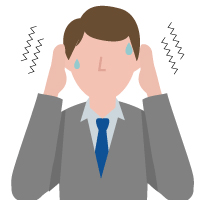
Your ears may get blocked when the plane ascends and descends, causing pain. This is caused by the eardrum in the inner ear expanding and contracting due to the changes in air pressure in the cabin.

If your ears hurt when flying, try dry swallowing your saliva, yawning, or chewing a candy. If this does not help, try the Valsalva maneuver.

  1. STEP1

    Firstly pinch your nose closed.

  2. STEP2

    Breathe in lightly, close your mouth, and force the air out gently so the breath is sent to your ears. (Do not do this too aggressively)

  3. STEP3

    Finally, swallow your saliva. Contact a crew member if you require pain relief.